

Performance Optimization Solutions Powered by Science
Your busy brain is running nonstop like dozens of open tabs at once on your computer that's been on without a restart for three weeks: unanswered messages, tomorrow's critical presentation, the difficult decision you still haven't made but know you desperately need to. Each one quietly drains the focus and processing power your best work depends on. Every Ascendify experience is rooted in peer-reviewed neuroscience and psychology research, translated into easily applicable techniques you and your teams can use from the very first session.
How Today's Work Environment Affects Your Focus, Wellbeing, and Performance
Your workday moves at the racing pace of what Dr. Cal Newport of Georgetown University calls the hyperactive hive mind: a constant stream of messages, meetings, and interruptions flooding your day, leaving little room for the deep focus your role demands. Gallup's latest State of the Global Workplace report found that manager engagement fell from 27% to 22% in a single year, and 40% of employees reported daily stress. The research below reveals how the cost of that pace is far too expensive a toll on your focus, health, wellbeing, and performance. That's why we're passionate about applying the science of neuroplasticity to power your performance and wellbeing.
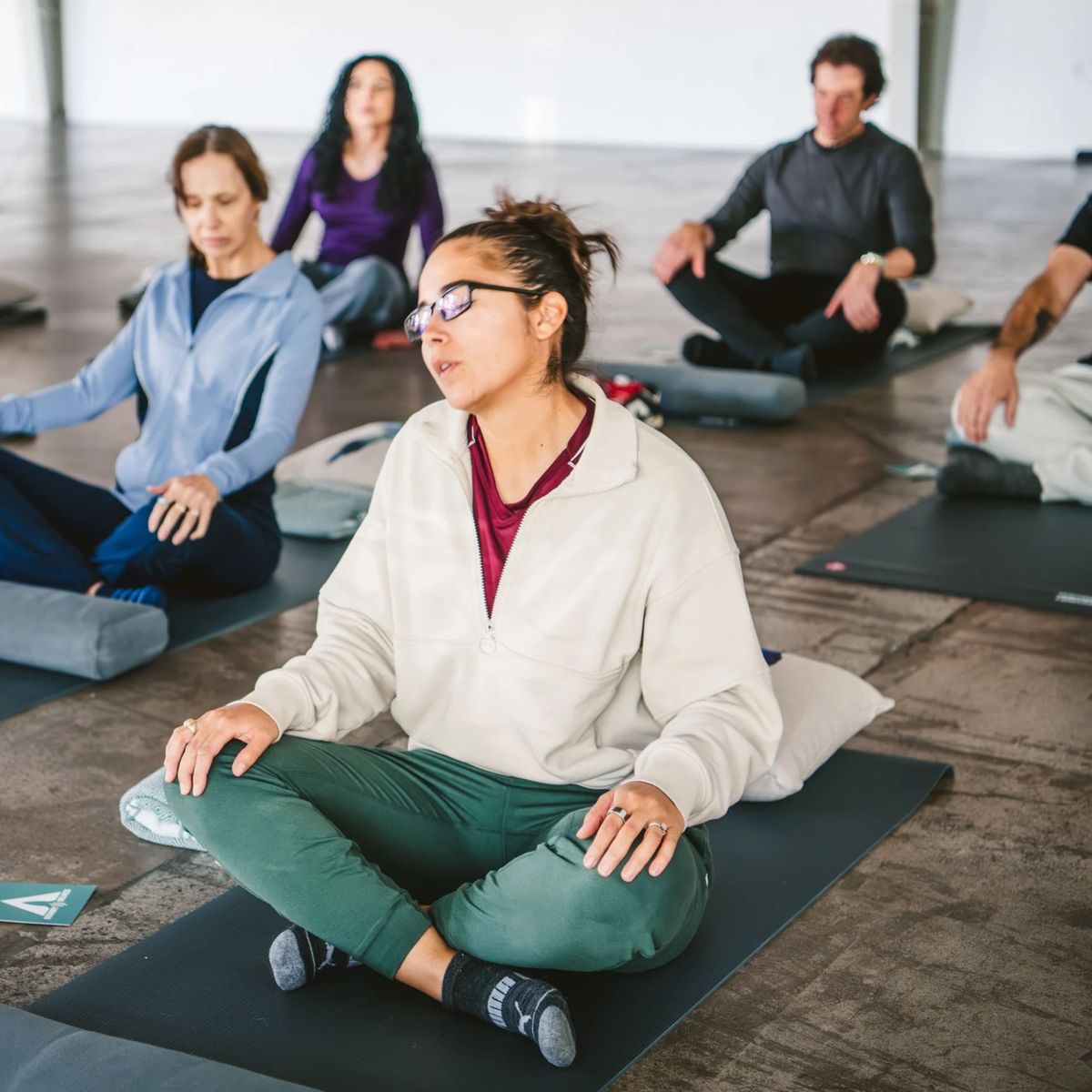
Why Focus Fades Through Long, Demanding Workdays
It's 2 PM on yet another demanding day: back-to-back meetings, an email inbox overflowing with continuous notification alerts boiling over into unmanageable counts, decisions waiting on you, exhaustion creeping in even though you keep pushing through...During days like this, which seem to be becoming the majority instead of the outliers, even your strongest leaders feel their focus slipping, and your teams are left scrambling harder than ever just to keep up.
Neuroscience explains why this dangerous cycle is far too harmful. Our brains are wired to tune out anything that stays constant, the same way we stop noticing the hum of an air conditioner as it becomes white noise. When we focus on demanding work for hours without a reset, our brains start tuning out the very goal we're focused on, and our performance quietly slips.
Dr. Ariga and Dr. Lleras at the University of Illinois found that brief, well-timed breaks prevented the decline in focus that sets in during a long task. Strategically timed breaks protect the focus your best work depends on.
The Hidden Health Cost of Sitting
Replying to emails, sitting through long meetings, doing deep work on the computer, doomscrolling on phones...During all of it we're stagnant in a painfully unnatural way our bodies were never designed to endure. When we sit like this for prolonged stretches, the large muscles in our legs and throughout our body begin to flicker and then switch off, causing our bodies to become less efficient at regulating blood sugar and blood pressure.
Dr. Keith Diaz has spent his career at Columbia University studying what long stretches of sitting do to the body. His lab found that light movement breaks during eight hours of sitting lowered blood pressure and significantly blunted blood sugar spikes after meals.
A larger trial led by Dr. Diaz found that short movement breaks reduced fatigue and lifted mood with no cost to work performance. It's abundantly evident that building movement into our days powers our energy today as well as our long-term health, yet most fail to do so as we feel so shackled to the never-ending hamster wheel of our workdays.

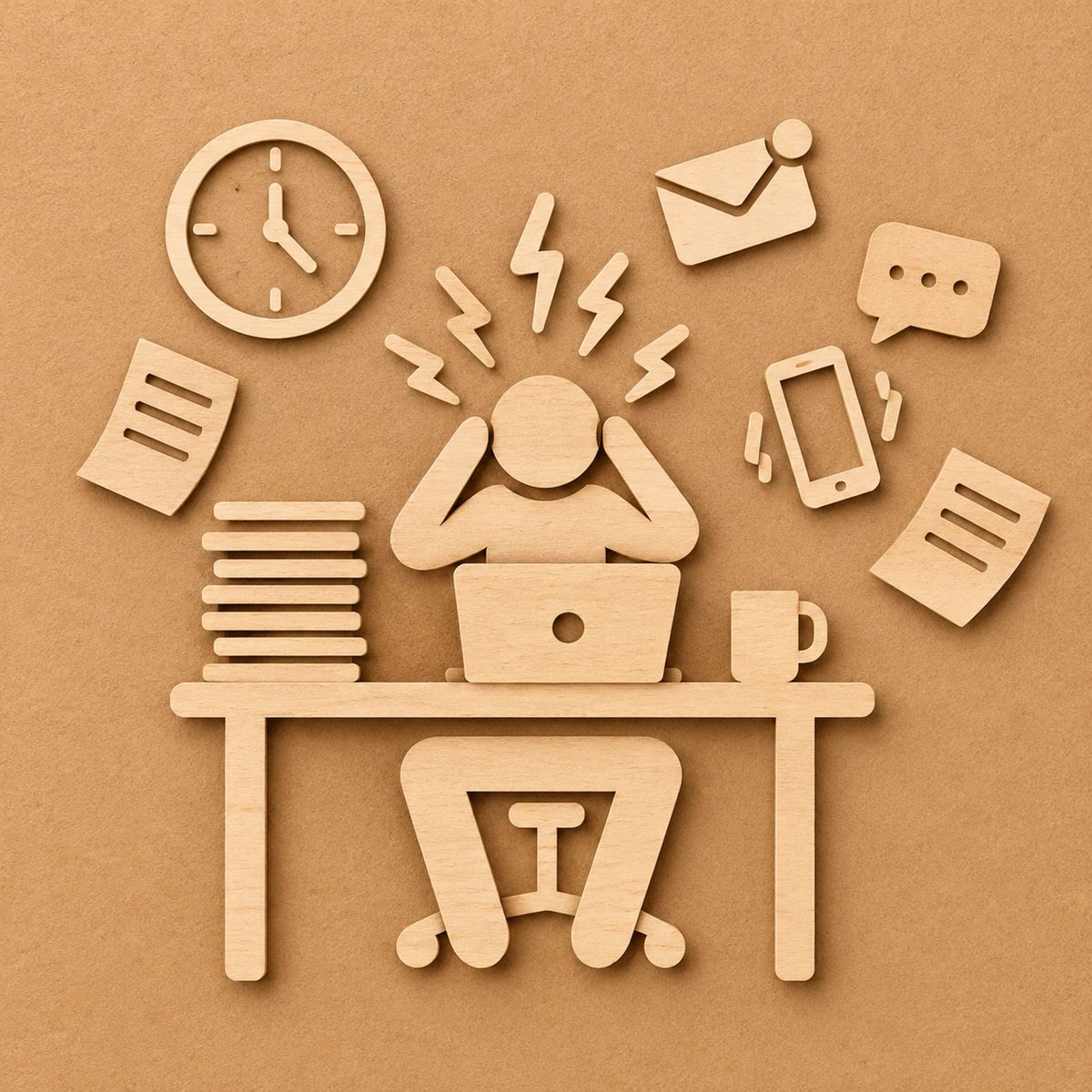
How Stress Affects Your Decision-Making
As a leader, the silent, sustained pressure you endure without even realizing it affects the brain regions you rely on most for peak performance. Under stress, your brain shifts control away from the prefrontal cortex, the region behind strategic thinking, and toward faster, more reactive circuits. Dr. Arnsten's research at Yale University found that even mild, uncontrollable stress rapidly impairs the prefrontal cortex functions behind planning, judgment, and working memory.
Even brief, consistent mind-body optimization practice strengthens those same capabilities. Dr. Basso's research at New York University found that brief, daily meditation enhanced attention, working memory, and mood in people new to meditation. That's why every Ascendify experience integrates neuroscience-rooted principles like guided meditation and deep breathing exercises designed to sharpen the focus, judgment, and working memory your role demands.
We Leverage Neuroplasticity to Deliver Business Results
Neuroplasticity is your brain's remarkable ability to rewire itself through repeated practice, at any age. Every intentional reset builds stronger neural pathways, the same way a well-trained muscle grows stronger with every rep. Dr. Hölzel's research at Massachusetts General Hospital found that eight weeks of mindfulness practice increased gray matter density in regions tied to learning, memory, and emotion regulation.
We translate that science into proprietary, actionable techniques curated for executives, entrepreneurs, surgeons, and driven professionals like you. Practiced consistently, they become your competitive advantage: sharper focus in your most critical meetings, steadier judgment under pressure, and the energy to perform at your highest level at work and at home.
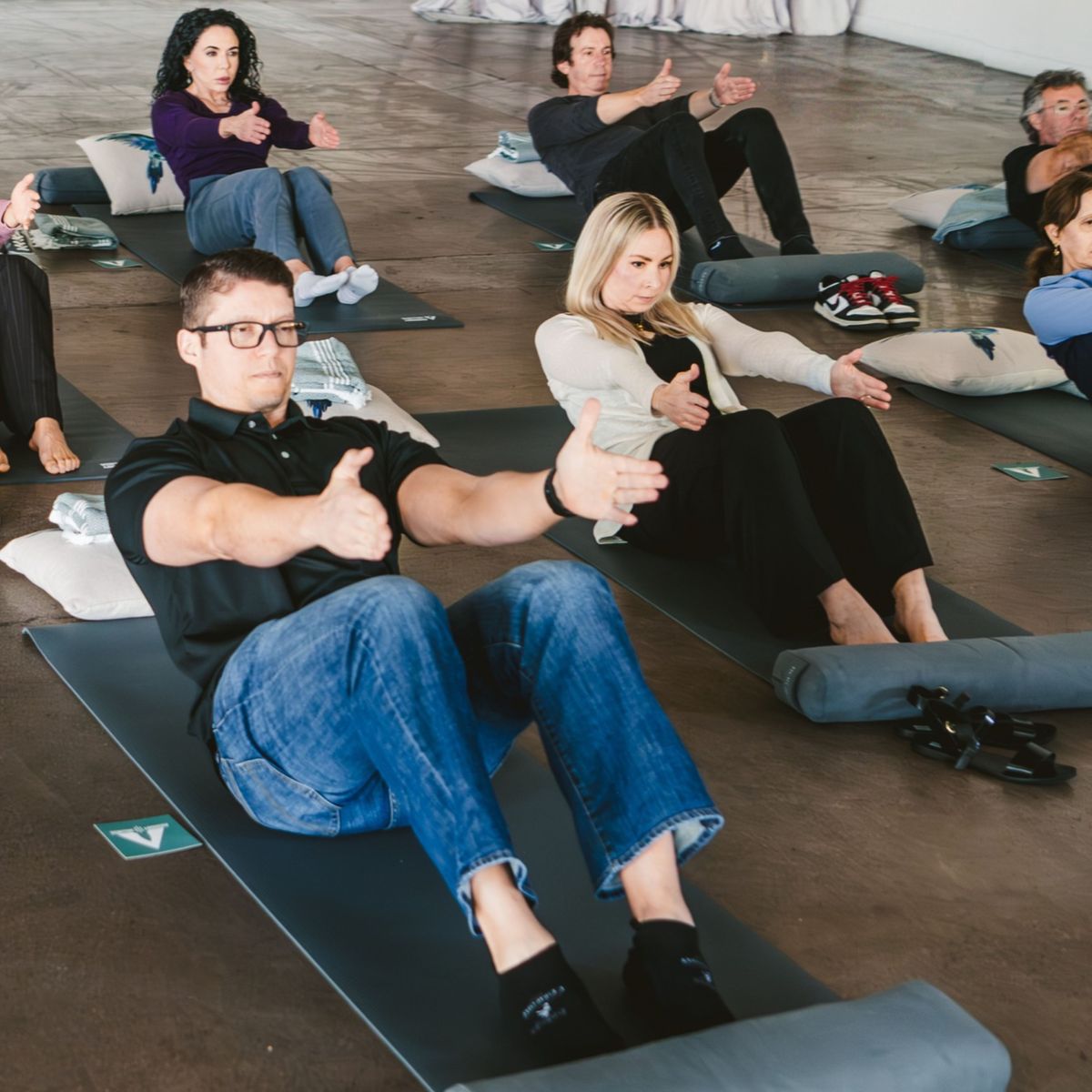
The Ascendify Method: Proprietary Experiences That Power Your Performance and Wellbeing
The Ascendify Method harnesses this research in proprietary, neuroscience-based experiences curated for executives, entrepreneurs, and driven professionals like you, and tailored to your organization's objectives.
Sharper Focus
Sustained attention through long agendas, complex material, and high-stakes conversations.
Higher Engagement
Teams and attendees who stay present, participate fully, and apply what they learn.
Stronger Morale
Shared experiences that build trust, collaboration, and engagement across your entire team.
Increased Productivity
Sharper prioritization and faster execution on the work that drives results.
Clearer Decision-Making
Steady, strategic judgment for high-pressure moments when the stakes are the highest.
Health and Longevity
Movement, posture, and deep breathing exercises that strengthen your incredible body to power your life and continued success.
Privacy Has Been Part of Ascendify From Day One
Dr. Dickerson and Dr. Kemeny's research at the University of California found that being observed and evaluated by others triggers one of the strongest stress responses the body produces. That's why every Ascendify experience is guaranteed to be private. We never photograph participants or share any information about your organization.
Protect Your TeamsFrequently Asked Questions About the Science That Backs Ascendify Optimization Experiences
Every Ascendify experience is curated by founder Liz Adriano from peer-reviewed neuroscience and psychology research on attention, stress, movement, and neuroplasticity. The studies and research that power Ascendify solutions are linked throughout this page and across our website, with full references listed below.
The theta brainwave state (4 to 8 Hz) is deeply restorative and powerful for how your brain processes information and emotions. Dr. Herweg's review at the University of Pennsylvania notes that theta brainwave activity has long been linked to learning and memory, and Dr. Knyazev's review of brain oscillation research concluded that theta oscillations are involved in memory and emotional regulation. Dr. Cavanagh and Dr. Frank at Brown University describe how frontal theta acts as a mechanism for cognitive control, rising when your brain needs to adapt, resolve conflict, or correct course. That's the same capacity you need to power every high-stakes decision you make, which is why theta sits at the center of The Ascendify Method Meditation vibroacoustic experience methodology.
Through most of your busy workday, your brain oscillates in the active, logical-reasoning beta brainwave state, driven by meetings, messages, and constant decisions. Theta (4 to 8 Hz) is a slower, deeply restorative state. Dr. Lagopoulos's research at the University of Sydney found that meditation shifted the brain toward significantly greater theta activity compared with ordinary rest. The Ascendify Method Meditation is curated to guide you through that shift effortlessly, from beta to theta.
Theta wave stimulation has been shown to improve sustained attention, working memory, and problem-solving skills, making it a powerful tool for driven professionals and leaders. Dr. Klimesch's research at the University of Salzburg found that theta activity reflects the brain's ability to encode new information and support working memory, and Dr. Cavanagh and Dr. Frank at Brown University link frontal theta to cognitive control, the capacity behind sustained focus and course correction. Guiding your brain into theta strengthens the same brainwave state your sharpest thinking relies on.
Beat frequency is the foundation for brainwave entrainment. When you hear two tones of just slightly different frequencies, one in each ear, your brain integrates them and perceives a third tone, called a binaural beat, equal to the difference between the two. A tone of 200 Hz in one ear and 206 Hz in the other, for example, produces a 6 Hz beat, right within the theta range. Dr. Gao's research found that the brain integrates the two signals into this third beat, and that a theta-frequency beat lowered fast beta activity, the brainwave state of your busiest working hours. Dr. Jirakittayakorn and Dr. Wongsawat at Mahidol University found that listening to a 6 Hz binaural beat for just 10 minutes induced theta activity across the brain, including frontal midline theta. The Ascendify Method Meditation uses mathematically sequenced, rhythmic sound frequencies, including beat frequencies and harmonic vibrations, to guide your brain into deep theta states, effortlessly.
The theta brainwave state (4 to 8 Hz) is associated with enhanced neuroplasticity, stress reduction, and improved emotional regulation. Dr. Ertl's research at the University Medical Center Hamburg-Eppendorf found that people who regulated their emotional responses most successfully showed the greatest increase in prefrontal theta activity, and Dr. Hutchison's research at the University of Manchester describes how theta activity during sleep enhances synaptic plasticity and supports the processing of emotional memories. Studies suggest that theta-frequency sound stimulation can enhance neuroplasticity, improving memory consolidation, emotional resilience, and mental clarity.
Dr. Eschmann's research at Saarland University found that people who increased their frontal theta activity in a single 30-minute session showed better motor performance and a stronger flow experience, the state of effortless control behind peak performance. In professional settings, Dr. Cavanagh and Dr. Frank link frontal theta to the cognitive control you draw on to adapt and decide under pressure. Whether your arena is the boardroom or athletic competition, theta supports precision and performance.
Problem-solving depends on your brain's ability to detect when an approach isn't working and adapt. Dr. Cavanagh and Dr. Frank found that frontal theta rises precisely when the brain needs to resolve conflict and change course, and Dr. Lagopoulos found that meditation increases theta activity in the frontal regions of the brain. Researchers at the Paris Brain Institute found that frontal theta activity increased in the moments just before people reached a creative insight. That's why The Ascendify Method Meditation is curated to strengthen the brainwave activity that powers flexible, creative thinking and breakthrough ideas.
The vibration of every sound you hear also oscillates throughout your body. Dr. Bartel's research at the University of Toronto outlines how low-frequency sound vibration can influence the nervous system, circulation, and brainwave activity, and research at Mahidol University found that a theta-frequency beat induced theta activity in the brain. Sound-based meditation also lowers stress hormones: Dr. Sathyanarayanan's randomized controlled trial found that four weeks of sound-based meditation lowered salivary cortisol, blood pressure, and anxiety compared with a music control group. The Ascendify Method Meditation, our proprietary vibroacoustic experience, leverages these principles to help you regulate stress, sharpen mental clarity, and optimize both cognitive and physical performance.
Yes. Dr. Lagopoulos's research at the University of Sydney found that meditation significantly increased theta activity, especially in the frontal regions of the brain, compared with ordinary rest. Dr. Aftanas's research found that frontal midline theta during meditation reflected an emotionally positive state and internalized attention. Paired with Dr. Cavanagh's research on frontal theta and cognitive control, these findings point to meditation as a powerful way to strengthen focused, adaptive decision-making.
The Ascendify Method Meditation is our proprietary vibroacoustic experience, curated to guide you effortlessly from beta into the theta brainwave state. Research at the University of Sydney found that meditation significantly increases frontal theta activity. Each session is tailored and integrated to your organization's objectives and kept to 30 or fewer participants to maintain our quality of excellence. It's offered within our three conference packages and Escape Room Team Building, since capacity is currently full for stand-alone sessions.
Dr. Keith Diaz's research at Columbia University found that short movement breaks reduced fatigue and lifted mood with no cost to work performance, and his lab trial found they lowered blood pressure and blunted blood sugar spikes during long days of sitting. Every Ascendify experience is curated around your agenda and venue, so your attendees gain that cognitive advantage seamlessly, whether in their existing seats or a dedicated breakout space.
Dr. Arnsten's research at Yale University found that even mild, uncontrollable stress rapidly impairs the prefrontal cortex functions behind planning, judgment, and working memory. Ascendify's experiences use a mix of neuroscience-rooted modalities, including guided meditation and deep breathing exercises, to help you and your leaders restore the composure that sharp decisions depend on.
Yes. Dr. Basso's research at New York University found that brief, daily meditation enhanced attention, working memory, and mood in people with no prior meditation experience, so you and your team benefit even if you have never meditated before.
Neuroplasticity is your brain's ability to form and strengthen neural connections through experience and repeated practice, at any age. Dr. Hölzel's research at Harvard Medical School found that eight weeks of mindfulness practice increased gray matter density in brain regions involved in learning, memory, and emotional regulation.
Founder Liz Adriano developed The Ascendify Method to translate complex neuroscience into actionable techniques you and your team practice together, then leverage at work and at home long after your event. With repeated practice, implementation of these neuroplasticity techniques creates lasting gains in focus, engagement, morale, and performance.
Many benefits begin within a single session. Dr. Ariga and Dr. Lleras at the University of Illinois found that brief breaks protected focus during a long task, and movement breaks reduced fatigue and lifted mood. Lasting change builds with continued practice, which is why every Ascendify experience delivers actionable techniques you can leverage long after the event.
They target what drives team performance: attention, stress, and the physical toll long days of sitting takes on your bodies. Every Ascendify experience begins with a consultation with founder Liz Adriano about your goals, audience, and agenda. From there, Liz curates the practices and research behind each experience to deliver the outcomes your organization is seeking, from focus and productivity to engagement, morale, and performance.